
To Book your Consultation Call or Whatsapp : +91 82470 84087
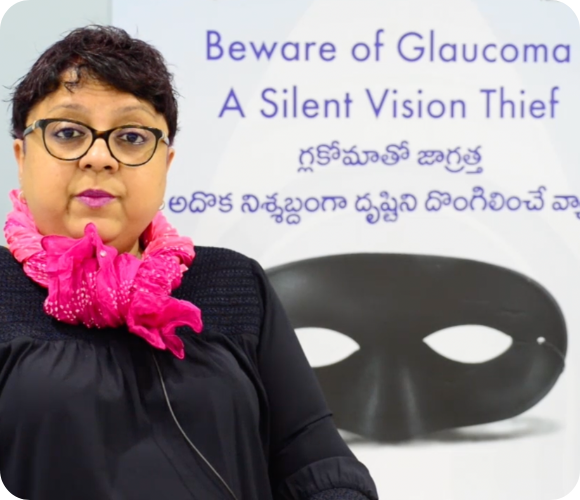
Glaucoma is one name given to a group of eye diseases that share one common sign i.e damage to the optic nerve head. This nerve gives us vision, colour vision and side vision; it is the latter that decreases slowly, so patients are unaware of the early symptoms. That is why it is referred to as the ‘silent thief of sight’. This progresses from the sides and till the very late stage, central vision remains intact. The damage to the optic nerve head is permanent and irreversible. The end result is irrecoverable blindness.
Contrary to popular belief, it can occur at any age, even in a new-born. However, the commoner types usually occur after the age of 40.
this usually occurs in small eyes (long-sightedness or hyperopia) when there is a slow closure of the drainage angle – initially it is openable, but in advanced cases it closes permanently. That is why this type of glaucoma exists in a spectrum and it is the ONLY type of glaucoma in which damage to the optic nerve head may be preventable, if it is detected early with gonioscopic examination, with timely performance of Laser peripheral iridotomy (LPI).
In this type of glaucoma – one may even experience a sudden blockage of fluid drainage causing an acute attack; this is a medical emergency as patients experience extreme eye and head pain, redness, nausea, vomiting and sudden drop in vision. Such patients also require LPI, in an emergency, to abort the attack, or else blindness is permament. However, performing an LPI in an acute situation is very challenging and surgical option/s may have to be explored.
This type of glaucoma is also very closely associated with the lens of the eye, which grows in thickness, usually due to age and cataract. Such a lens occupies space in an already crowded area in the front of the eye, adding to the closure of the drainage angle. Early lens extraction is recommended in PACG.
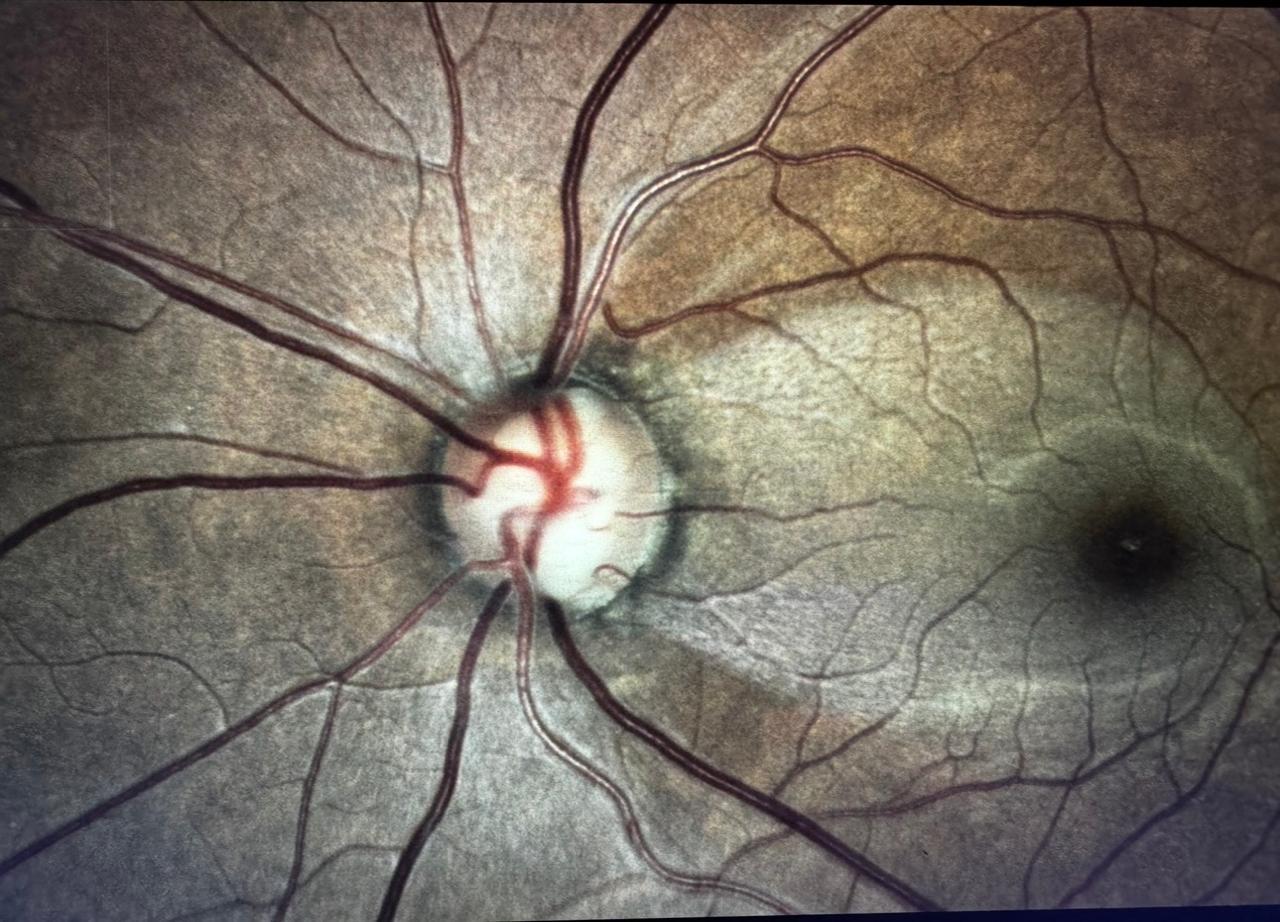
In its early stages, glaucoma usually has no noticeable symptoms. This happens not only because the side-vision damage due to the disease is slow and chronic, but also because the better coompensates for the eye that has more advanced disease.
As the disease progresses, patients may experience:
Regular eye examinations are the only reliable way to detect glaucoma before vision loss occurs.
Regular eye examinations are the only reliable way to detect glaucoma before vision loss occurs.
Advanced side vision loss in Glaucoma Central vision is intact till the last stage
Dr. Pathak Ray uses extensive clinical experience and advanced diagnostic technology to evaluate the optic nerve head accurately.
There is no cure for glaucoma – like other chronic diseases (diabetes, hypertension etc.) it can only be controlled. However, glaucoma may progress even on treatment. Therefore, not only is the treatment lifelong, but also follow-up has to be at regular intervals, determined by the stage, severity and type of glaucoma.
Treatment aims to reduce intraocular pressure and prevent further optic nerve damage – in other words, the treatment aims to maintain whatever vision the patient has, as recovery of what is lost is not possible.
Certain systemic diseases also (asthma, heart disease) limit the type of eyedrops we can use.
Surgery is also only a means of controlling the disease, and is not a cure. Follow-up has to be maintained lifelong even if one undergoes surgery. Generally, about 50-60% can be off glaucoma medications after traditional surgery, but usually in advanced cases, this is not possible and patient may have to continue eyedrops, though in reduced numbers. However, in MIGS, up to 90% of patients can be off eyedrops.
Surgery too, does not help to recover what is lost; it only helps maintain what is left. Traditional surgery is not without risks, so it is usually not offered as first-line management. But MIGS has been a game-changer, as it is safer and can be offered much earlier in the disease, usually when cataract surgery is undertaken.
Dr. Pathak-Ray is equally adept at performing traditional and modern surgery, in adults and in children.
There is no cure for glaucoma – like other chronic diseases (diabetes, hypertension etc.) it can only be controlled. However, glaucoma may progress even on treatment. Therefore, not only is the treatment lifelong, but also follow-up has to be at regular intervals, determined by the stage, severity and type of glaucoma.
Treatment aims to reduce intraocular pressure and prevent further optic nerve damage – in other words, the treatment aims to maintain whatever vision the patient has, as recovery of what is lost is not possible.
Dr. Pathak-Ray recommends individualised plans based on the stage and type of glaucoma.
Glaucoma doesn’t have to mean vision loss. With early detection, appropriate management, and regular follow-ups, most patients maintain good sight and quality of life.
She encourages patients to see glaucoma management as a partnership, where awareness and consistency make all the difference.
Dr. Pathak-Ray has prepared easy-to-understand educational materials on glaucoma care, including downloadable guides and instructional videos.
These resources empower patients to manage their treatment effectively and stay informed about long-term care.
If you have a family history of glaucoma or experience any visual changes, schedule an appointment for a comprehensive eye examination. Early detection is the most powerful tool to preserve sight.